

很多同学在进行英语的写作或者是口语的练习时候,经常会纠结自己的表达是否地道,或者是想到的中文表达。
可是一到英文表达的时候,就不知道如何下笔或者是开头,主要的原因还是因为读的少,见的少,所以一下子需要的时候“语言的口袋”空空如也。
最近在阅读一本英文书,叫做《Do Hard Things》,翻译过来就是做难的事情,书本的前几个章节就在讨论大家所认为的toughness其实还是有点过时,而应该是用新的方式去定义所谓的坚强。

其次,parenting styles 教育孩子的一些方式的错误和认知,经常用大量的强制性和打压的方式去教育孩子,而没有给到必要的支持,最后塑造的孩子并不是坚强的,反而是内心极其脆弱的。
在阅读的时候,小编特意找到了几个想说去很难去表达的英文短语,以及我们常常忽略的简单表达来分享给大家。
一个高频使用的句式:
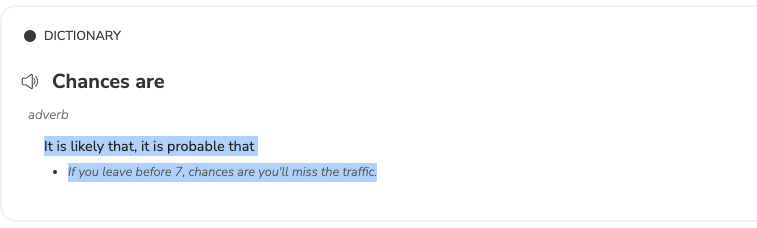
Chances are that visions of individuals overcoming adversity and some sort of pain or suffering lead the way.
Chances are that…这个短语在意思上等同于it seems likely that…,表示很可能是…;
所以当我们想要去表示什么事情很可能发生的时候,就可以去用上这个表达,去替换掉probably,或者是is likely to do等等。
2个想用,却说不出来的表达:
Refrain:反复说的话,老调,口头禅
A refrain is a comment or saying that people often repeat.也就是我们经常说的口头禅。
A typical refrain from an authoritarian parent might be,“You need to do(this)because I said so.
原句的意思是,比较独断的家长的口头禅是:“你需要做这个,是因为我这么说的。“
其他例句:
Her own refrain went:This is not for me.
Look no further than…:只看什么就行
Callous:to harden,to make insensitive,to develop a thick skin.Look no further than the language often used with toughness.We proclaim teams and individuals as“soft,”in need of“hardening up,”and implore our teams to“show no signs of weakness.
Look no further than…这个短语乍一看其实是很难直接翻译出来的,需要结合语境才能去准确理解,一般的话表示为“只要看…就行”或者是“不用看别的,就看…就行。”
一般在使用的时候,更多的是为了去进行举例子,去针对某个现象,进而引出例子的一个衔接。
3个简单,却好用的英文表达:
Fall short:失败,未达预期
Even in terms of discipline,the area that you would think a demanding style would be successful,it falls short.
这个短语,虽然很简单,可是很多同学却宁可去使劲想it doesn’t succeed eventually这样稍微有点复杂的表达,也不会想到简单2个单词其实就能表示为”失败,伟大目的,或者是为达到预期“,当然你也可以用fail。
以后在写作中想要表达,某件事情没有达到预期的结果的时候,直接用fall short即可。
例句:
Their efforts fell short.
他们的努力失败了。
Upon一...就...
Upon seeing their child miss a shot,they are the ones who jump straight to criticism.
upon算是我在学生写作或者口语比较少见的介词,因为中文的意思很难翻译,或者是很少去练习使用。
比如说,我们想要表达”一看到…“的时候,我们想到的是when I see,或者是once I see…等等,一定是很自然想到句子,而不是一些介词结构。
比如原文中,讲到的是就是比较专断的家长,一看到孩子在比赛场上失利,就会马上跳起来进行批评。
Upon seeing their child miss a shot,they are the ones who jump straight to criticism.
以后我们就可以学会用upon seeing...,一看到什么就怎么样。
In the name of以...的名义
In the name of toughness,we rationalize the absurd.
这个表达其实很简单,确实很少用,当然一看到翻译,我就想到了周总的《以父之名》。
一般in the name of的短语,其实还是会有点贬义的意味在:
cruel experiments on animals carried out in the name of science
以科学为名进行的残酷的动物实验
the things people do in the name of love
人们以爱的名义所做之事
通过例句是不是能够理解到in the name of多以利用什么样的名号去做些不好的事情吧。
4 1个不一定会翻译准确的短语;
on the line?
“Carroll wants players who come through when the game is on the line.”
当你看到on the line是不是会直接翻译成”在线上“的意思,最开始我也是那样去想的,不过感觉翻译起来很怪;
然后仔细一查,意思完全不着边,准确的意思是:“有失去的可能;处在危险中”。多少有点古语的”箭在弦上,不得不发“的意味,不过古语的意思是指比喻情况紧急,采取某种行动已成为必然之势,还是有差别的。
所以,on the line表示的是某件事情或者某个东西处在危险中,或者是有失去的可能性。
比如说:
I have to finish this report by tomorrow.My job is on the line.
[=I will lose my job if I don't finish this report by tomorrow]
我得在明天以前完成报告,不然就有失业的危险。
The champ's title is on the line in this fight.
[=he will lose the title if he loses the fight]
如果这场比赛输了,他就会有失去冠军的桂冠(的危险)。
5,一个有效的教育类语料:
Responsiveness:
Baumrind defined responsiveness as"the extent to which parents intentionally foster individuality,self-regulation,and self-assertion by being attuned,supportive,and acquiescent to children's special needs and demands."In other words,how well do parents respond to and meet the needs of their children?After they lose a soccer match,do you greet your child with warmth and support?Or do you go straight into criticizing their play?
在书上提到了2种parenting的方式,其中一种便是responsive,即回应式。更具体点的就是,去回应孩子在情感上的需求,给予支持等等。
在家长和儿童的教育话题中,特别是举例子的部分,其实大家就可以用2种家长的对比方式去进行论证,是哪一种教育的方式更有效?
是比赛输掉之后的,用依然热情的方式去迎接自己的孩子,还是直接去批评没有赢得比赛呢?
After they lose a soccer match,do you greet your child with warmth and support?Or do you go straight into criticizing their play?
以上就是《用英语表达口头禅怎么说?》介绍。外语加油站,专业外语培训服务平台。快速了解雅思、托福、SAT等外语考试报名信息、报考要求、真题详解等,欢迎在线预约咨询。